Monday, October 28, 2013

Pumpkins for Halloween and After


Pumpkins for Halloween and After

Halloween is upon us again and there will be lots of dressing up going on – princesses, witches, ghosts, skeletons, you name it. Even pumpkins get a chance to join in with carved or painted faces, decorative decals, wigs, fake ears, googly eyes and expressions that range from funny to frightening.

I prefer to keep my pumpkin uncarved until after the holiday because I have post-Halloween plans for it and don’t want it to spoil; it is food, after all. So, after the big day/night, if you have a pumpkin you might want to use in a different way, one that nourishes and delights without the scary element to it, here are some suggestions:

Remember eating pumpkin seeds as a kid? This is where they came from. Cut off the top of the pumpkin, roll up your sleeves, and dig right in. It’s wet and stringy inside but getting the seeds out is worth it. This is a great job for kids where they can be messy with permission. You can rinse off the seeds or not, your choice. Lay them out on a sheet pan and drizzle them with oil (and salt if you like salty seeds). Bake them in a 225-250 degree oven for about an hour, stirring them occasionally. Check on them periodically. If they seem dry or are beginning to brown, take them out. Cool them down before eating.

Peeling off the skin isn’t easy but it is less difficult when the pumpkin is soft. Cut the pumpkin in half. Scrape out the seeds (if you haven’t already), and turn the halves cut side down on a flat sheet with sides. Add a layer of water to the pan and bake at about 350 degrees for 45 minutes or more (it depends on the size of the pumpkin). When a fork is easily inserted into the skin, remove from the oven and cool. The skin should come off easier now. Mash the pumpkin and use in your favorite recipe.

You may want to use smaller, sweet pumpkins for your recipes instead of the Jack o’ Lantern size. I have used both – and butternut squash as well. The puree from any of them can be used in soups, smoothies, cakes, pies, pancakes, waffles, muffins. If the cooked pumpkin insides are too moist, let the excess moisture drain off in a sieve.

Pumpkin pieces can be baked, steamed, boiled, and microwaved. Use the method that most suits you. I plan to make pumpkin soup, as I do each year. What I don’t use, I freeze, to be used another day, in another way. Enjoy your pumpkin and…

HAPPY HALLOWEEN!

Here are some great ways to use your pumpkin:

For some lower-sugar, delicious-sounding recipes:
http://www.yummly.com/recipes/healthy-low-sugar-pumpkin

Tuesday, October 22, 2013

The Palisades in Autumn


The Palisades in Autumn

My backyard extended a little further this past week as I traveled up the Palisades parkway along the New Jersey side of the Hudson River on the way to Massachussetts. The trees were dressing the cliffs with fall colors and the roads were crunchy with fallen leaves. It is autumn, at last. The temperatures here are still a tad warmer than is typical but that should be changing soon; I heard that tomorrow will only be in the mid-fifties.

Autumn is usually such a lovely time of year in the northeast. It provides a palette of reds and golds as the trees begin their resting period. It is a gradual transition from the intensity of summer into the extremes of winter. While each season has its typical characteristics, I find the edges between them most interesting. It helps the land and the animals prepare for what is coming. It signals migrating birds to fly.

I think it helps people, too, to anticipate the next phase of the year. We get clues on how to dress, what foods are best to eat, what activities are appropriate to engage in. I’m glad that I live in a four-seasons area even though in the midst of winter I sometimes wonder about a warmer climate. But then I would miss the snow. When the seasons change, it feels like I have finished reading one book and am ready, eager, to start on another. 

Wherever we live, whatever the weather, each season has its holidays, its plant cycles, and its own personality, its individual charisma, all there for us to enjoy.

A look at the Palisades and activities available:

And a look at the characteristics of the seasons:

Monday, October 14, 2013

Pumpkin Patch Near Home


Pumpkin Patch Near Home

I was out on a pumpkin hunt with my grandson, seeing how many pumpkins we could find around the neighborhood. They seemed to be everywhere this time of year, bright symbols of autumn and reminders of Halloween. We found pumpkins on porches, on the steps of the local elementary school, peeking out of windows. And then we came upon a pumpkin patch, in front of a house right in the middle of a block!

I mostly think of a pumpkin patch as being in a farm field, certainly not in a housing development. But there it was, in a space more apt to have small clumps of flowers or seasonal plantings of mums than a pumpkin crop, green vines bearing yellow flowers and orange fruit (yes, a pumpkin is a fruit). 

I asked the owners about it. It seems that they had left a pumpkin outside to feed the rabbits that happened by. The seeds that weren’t eaten planted themselves and now were happily growing. That got me thinking about how life has a way of supporting itself. The plot the pumpkins were growing in wasn’t ideal for the length of the vines but they were thriving nonetheless, a symbol of life’s determination to express itself. We live in a tough world yet the seeds of hope survive, even in the most difficult situations.

The pumpkin patch was a joyful surprise for me and added quite a few pumpkins on my grandson’s hunt. 

(The final count: 61).

This site has just about everything to know about pumpkins, from planting to harvesting to eating. Enjoy!

What’s a fruit, what’s a vegetable?
http://www.mayoclinic.com/health/fruit-vegetable-difference/MY02201

Tuesday, October 8, 2013

Our Tulip Tree as Harbinger?


Our Tulip Tree as Harbinger?

Our Tulip tree is finally shedding its leaves. I say finally because it usually starts the process in August, turning its leaves golden well before the other neighborhood trees begin changing and by the end of the month, its limbs are bare – a hint of Autumn before the season officially changes. So here it is, early October, and the tree is only beginning to lose its foliage. What is going on?

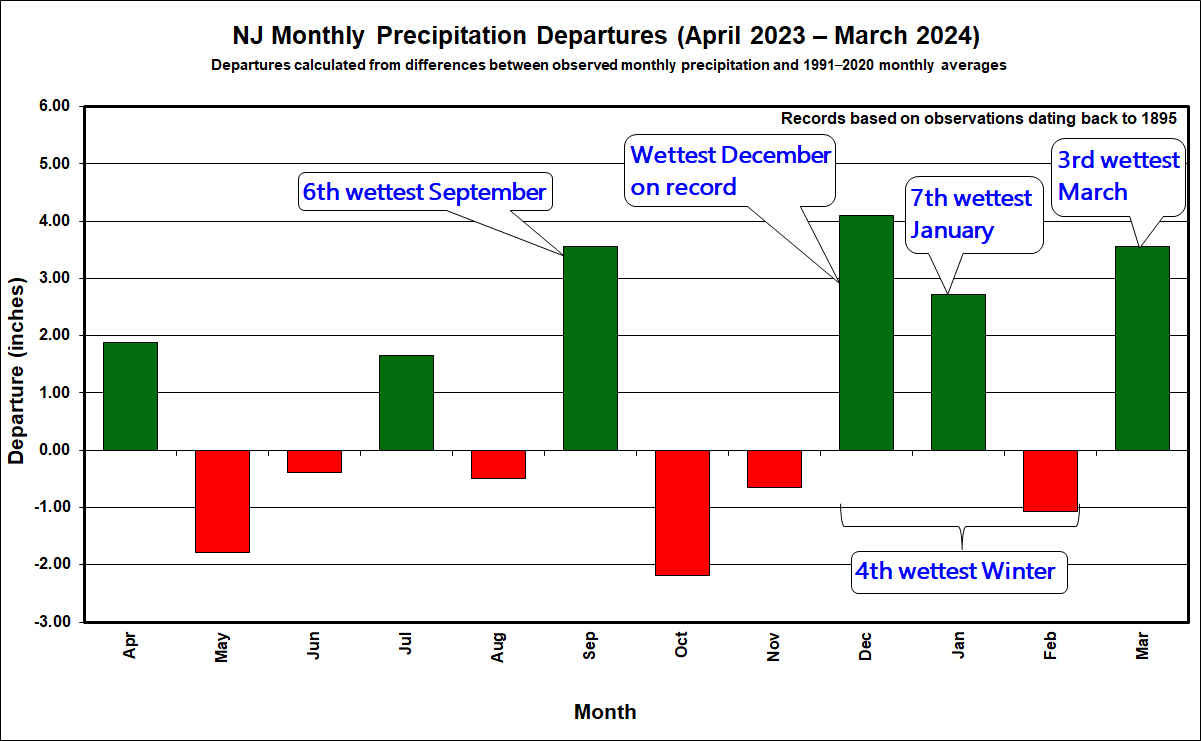
Tulip leaves are sensitive to water. When the weather is dry, the typical condition in August, the tree feels water stress and the leaves tend to lose their viability. But this year, according to the Office of the New Jersey State Climatologist at Rutgers University, while we had a rather warm July, we also had the wettest June on record and the second wettest summer so the tree had less stress and stayed leafy.

It was nice to have the tree so green for so long but this was not usual summer weather. Will this be what summer is like from now on? Anything that alters weather shifts what we can expect from the vegetation. With so much information coming out about how the climate is changing worldwide, it may seem like a little thing to be concerned about individual plants. Yet weather conditions affect all things, be it the soil, plants, insects, animals, humans. I know that weather goes in cycles. I also know that we have changed the atmosphere through our activities on earth. Perhaps the Tulip tree is one of the harbingers of change, of what will be the new normal. As my father used to say when I asked a question he couldn’t answer, “We’ll just have to wait and see.”

From The Washington Post Health and Science section:

Office of the New Jersey State Climatologist at Rutgers University rain statistics:
http://climate.rutgers.edu/stateclim/images/nj_12month_pcp_dep.JPG

Monday, September 30, 2013

Speak for the Trees


Speak for the Trees

My neighborhood is about 45 years old. The garden plantings that were once mere twigs are now full-grown, often overgrown, bushes. The trees, especially, have grown in height and stature. A variety of species were planted on the strips of grass near the curbs to provide shade along the sidewalks, a welcome benefit during the hot summer days.

As the years pass, however, the trees are having trouble. Their roots are struggling for space to expand. Many sidewalks are now a mixture of gray and white concrete patches applied to the sidewalks to repair cracked cement where the tree roots have forced their way outward. Sometimes the trees expand over the cement squares, demonstrating a will to grow regardless of the circumstances surrounding them. Others send roots underneath the sidewalk squares, raising the cement blocks as they reach toward the expanse of the lawn.

We labeled this tree’s break for freedom The Step. It used to be a little glitch in the sidewalk; now it is several inches up, demanding care when we walk. I wonder how much more the cement will be raised. Will the homeowner take action and cut the roots so the concrete block can be lowered? Will that harm the tree?

Planting trees with limited growing space seemed like a good idea in the beginning but it stunted the plants’ growth. Many houses now have no shaded frontage because the trees have died, way earlier than their designated lifespan would indicate. Dr. Seuss’ The Lorax  speaks for the trees; we could have used him when the houses were being constructed. Trees are an important and valuable asset to our communities but their needs should be considered, too.

Sometimes we forget that our actions have long-term effects. It is hard to fully anticipate what might happen decades down the road, whether in regard to nature or politics or health, but if we take the time to look beyond what seems like an immediate benefit to the possible later results, perhaps we could spare ourselves some angst – and the trees a shortened life.

Want to know how long trees can live?
http://bigtree.cnre.vt.edu/TreeAge.htm

Tuesday, September 24, 2013

Bald Eagles are Back!


Bald Eagles are Back!

I see many birds in my backyard, even some large ones like crows, hawks, ducks and the occasional turkey vulture. Bald eagles, however, are not among them. This weekend I took a mini-cruise on the Maurice River in NJ and had the opportunity to spot eagles galore. Some were on their nests, others were perched on the bare wood of trees along the banks of the river. The eagle here (click on the photo to enlarge it) had caught a fish and was flying off with it. The bird landed on a branch and proceeded to enjoy its meal.

The bald eagle, our national symbol, was once in trouble. A combination of land development, destroyed habitat, and hunting threatened to destroy the eagle population. Some claimed that the pesticides like DDT were responsible for thinning the birds’ eggshells and contaminating fish and water supplies. The population had gone from 100,000 nesting pairs to only 487 in 1963. DDT was banned in 1972 and on July 4, 1976, the US Fish and Wildlife Service officially listed the bald eagle as a national endangered species.

Since then the eagle population has rebounded. On June 28, 2007, the Department of the Interior announced the recovery of our nation’s symbol and removal from the list of threatened and endangered species. There are now over 9,700 nesting pairs in the U.S. Quite a comeback.

Seeing a bald eagle is thrilling. It has a presence. It also has a right to be here, as much as we do. We really do need to be more sensitive to our world. I’m glad to see the bald eagles are back.

History of the Bald Eagle’s decline and recovery:

Two pages of great Bald Eagle info:

History and activities along the Maurice River:
http://www.mauricerivertwp.org/environment1.html

Tuesday, September 17, 2013

Tomatoes - Again?


Tomatoes – Again?

I’m sorry. Here it is, almost at the end of the growing season and I am still talking about tomatoes. I admit to being obsessed with them this year. Perhaps it was the challenge of trying to actually harvest some before the squirrels and rabbits got them all.

Challenges often lead to innovative solutions and this one did. We discovered that surrounding the tomato vine with fine netting seems to keep the critters at bay. I don’t know if they are confused or if the mesh coating covers up the tomato smell; what I do know is that we have had produce ripening on the plant without interference.

I acknowledge that the patch is not pristine looking and I can’t imagine a real farmer doing it but for such a small plot, it has proved to be a reasonable answer to an annoying problem. Each day I eagerly go out to the garden and pick the latest juicy, red treat.

Okay, I confess that I don’t deny the animals everything. After all, they can’t go off to the supermarket when they need food. I leave some of the lower hanging tomatoes out of the mesh for them to share. But at least now we can all enjoy Mother Nature’s bounty. I don’t need to wait until Thanksgiving to be thankful – I feel grateful every time I eat a tomato grown right here at home.

Tips for growing tomatoes:
And now, recipes for those great tomatoes!
http://www.cookinglight.com/food/in-season/fresh-tomato-recipes-00412000076956/page82.html