Showing posts with label climate change. Show all posts

Thursday, October 10, 2019

Caring for Our Climate and Our Earth


Caring for Our Climate and Our Earth

This is strange autumn. Mother Nature seems confused. The temperature is bouncing up and down, sometimes zooming into the 90s. Our tulip tree, which usually loses all of its leaves by the end of August, still is partially green. The backyard normally is awash in leaves by now but the maple trees are only reluctantly shedding their foliage. It is October, right?

We do have acorns, though. Lots of them. We can hear them crunch underneath the cars that pass by and under our feet as we take our usual after-dinner walk. There seems to be more than ever dropping from the oak tree in front. At least the squirrels will have some good meals this winter.

If Mother Nature is confused, how are we to understand what is happening around us? We were up in the Alps not long ago and the temperature plus humidity soared to over 105 degrees! It’s hard not to take the concept of climate change seriously when the climate is changing all around us.

Other than observing our own tiny part of the world, how do we know this is happening? NASA helps inform us.
Our kids need to know what’s happening, too.

Earth is an incredible place. I hope that we can preserve its beauty and function and remember that we are visitors here. Let’s be good guests and care for our climate and ultimately our planet.

Monday, April 2, 2018

Seasons and Changing Climate


Seasons and Changing Climate

Two weeks ago Spring arrived in an unusual way here in the northeast - we had four snowstorms. We also had crocuses hiding under the blanket of white. Last week we had atypical temperatures in the high sixties - and daffodils. Today it was back in the 40s and the flowering plum tree in our front yard was, well, flowering.

I have always respected the inner sense of nature with its seasonal consistency. It has traditionally provided focus in our world. But lately I am concerned; our weather is changing. The seasons are shifting with winters becoming shorter and summers becoming longer, in weather terms. We have been experiencing more floods and extreme storms. Islands are becoming flooded and unlivable. Forest fires are fiercer and more prolonged. Glaciers are melting and animals are losing traditional habitats. I wonder how our food supply will be affected as well as our health.

I hope that we can preserve our beautiful planet for future generations. It is truly an amazing place. And as Spring moves toward Summer, I will plant some vegetables as I do each year. They will each take their own time to grow and hopefully produce their offerings that will be so appreciated in our family. There is nothing as delicious as a handpicked and immediately eaten tomato!

How is climate changing?

And more:
https://www.nationalgeographic.com/environment/global-warming/global-warming-effects/ 

Wednesday, March 21, 2018

Snow in Spring


Snow in Spring

It’s Spring! Normally I’d be thinking of crocuses and daffodils and waiting for the hibiscus to send out thick buds that will turn into giant red flowers. But this season has started off strangely. The bushes in our backyard are showing puffs of white instead of the colorful promise of hydrangeas. Branches from the pine trees are touching the ground with the weight of wet snow.

What is going on? This is the fourth nor’easter we’ve had this month, bringing snow and sleet at a time when we should be having a gentle shift into the next season. We speak about global warming and yet we see snow in Spring?

I remember the saying that March comes in like a lion and goes out like a lamb. I also can recall one year that we had snow in the beginning of April. So things do sometimes defy expectations. However, we are in a time of large shifts in our climate.  It’s hard to ignore the changes that are taking place across the world. The atmosphere is heating up, causing glaciers to melt, oceans to rise, more floods, and fires in drier lands. And yet, we can still have snow at the beginning of Spring.

What we do affects things, whether it is personally or globally. Our climate has changed over the millennia but we seem to be hurrying things up lately. I hope that our current leaders work to minimize climate changes rather than take a short-term approach for political gains. Our planet is a marvelous place; let’s try our best to support it.

U.S. Spring forecast:

NASA evidence of global warming:
https://climate.nasa.gov/evidence/

Monday, June 5, 2017

Adaptable Geese


Adaptable Geese

It was a rainy day. We were just coming home from a round of errands, wondering what the rest of the day would bring, when we saw a family of geese strolling across the wet street. The goose (female), gander (male) and goslings (babies) were completely at ease in the middle of the road. Fortunately, it was a side road and not too busy. We turned to the right, another car edged toward the left, and the goose family slowly, slowly moved toward the curb.

Geese are no strangers to this area. We see lots of them flying in vee formation on their way south. Sometimes they land by a pond or a grass field for a rest. But more of them seem to be making their homes locally now. There are plenty of lakes and streams around to keep them happy and the temperatures generally are not too frigid. But this is new for the Canadian geese that traditionally have flown further south.

Times and temperatures change. The geese, which were recently endangered, are now flourishing thanks to wildlife agencies. And many have made their peace with new environments. They are adaptable.

It’s something we can think about. When nature changes, it’s not only the geese that must adapt. Temperatures are rising. The ocean is heating up and heading inland, threatening some shore communities and islands. Some areas are becoming parched and fires are more common and difficult to control. Extreme weather patterns are cropping up.  

Can we change our habits to help minimize the effect of global climate change? Can we recognize the importance of our behavior on nature? Will we need to be as adaptable as Canadian geese?

Why do some geese stay?

Extreme weather changes:

Observing mild weather:

Monday, February 27, 2017

Crocus Alert!


Crocus Alert!

It is still winter but the crocuses know what is coming and they want to be first to celebrate. They pop out in lovely bloom sometimes pushing through a dusting of snow, though this week has been a weather surprise, for them I suspect as well as for us. We have been having 70 degree days in February!

I wrote about a similar uptick in temperature in 2012. The weather seems to be changing and not just seasonally. There is evidence of a rise in temperature in many directions; sea levels are rising, glaciers are retreating, extreme weather events are happening more frequently. There have always been shifts in temperature but this seems to be man-influenced. The atmospheric carbon dioxide is the highest it has ever been, keeping in the earth’s heat.

It’s hard to deny the evidence though some people do try to. I think it’s better to work with science than to deny it. Our planet is such a beautiful place, I hope we can respect it and protect it. Soon many flowers will bloom and remind us of the seasons ahead. Right now, however, it’s the crocuses’ job to alert us to Earth’s offerings and encourage us to value what wonders we have.

Lots of crocus info on planting and care:

Climate change evidence:

Tuesday, March 3, 2015

What a Winter!


What a Winter!

It snowed a few days ago. Then we had freezing rain. The streets were iced and the accidents abundant. Then it thawed a bit causing some flooding. Now, late afternoon on this gray Tuesday it is starting to snow again. Just a few flakes so far and only a couple of inches predicted. Oops, it has already shifted to freezing rain. It’s one storm after another.

What a winter. It is affecting the whole country differently. Boston is on the cusp of having record snows this year: Maine already surpassed its record. And while it would seem terrific to be in San Francisco where the Bay Area is experiencing the warmest weather in its history, it also in the midst of a record drought. Even Sitka, Alaska, is having an unusual winter – it’s warmest.

Call it polar vortex or whatever, it is certainly a strange season. I wonder how the migrating creatures are faring. Are they as confused as we are? Is nature playing games with us or is it that we have been playing games with nature? Both, it seems. Nature traditionally fluctuates in the amount of heat and chemicals available to earth but it is human activity that is creating a larger problem. Check out what NASA and the Environmental Protection Agency have to say about climate change. This winter may be a fluke but it might be a harbinger as well.

Temperature extremes this winter:

NASA’s look at climate change:

For an in-depth analysis from the EPA:

Tuesday, January 21, 2014

Boat Dreams Come With Responsibility


Boat Dreams Come With Responsibility

Winter is confused this year, with temperatures bouncing from the mid-sixties to minus degrees. We have come to expect some variation but this season has been extreme and we’re not even halfway through. The confusion is justified. The seasons are determined by the earth’s rotational axis as it travels around the sun in an elliptical path. Each season has its own character in regard to precipitation, temperature, wind, the amount of daylight. All of this affects our activities.

But our seasons are experiencing change because our climate is changing. New patterns of drought, flooding, cold, and heat are affecting our earth, which in turn affects us all. We have experienced stronger storms in the past few years, with unanticipated outcomes. Our crops are dependent on stable local climates; too much variation can lead to crop failure. There are things we can do to slow it down, if we have the will. http://www.epa.gov/climatechange/wycd/ 

Perhaps we can call up the will through our memories and daydreams. This boat, sitting swaddled by the bare trees, hints at warmer days, beach weather, fishing, and adventures on the water. The garden catalogues that arrive in the mail speak to us of new growth, of vibrant spring colors and gardens filled with ripening vegetables waiting for the right time to be picked.

And while we’re daydreaming, let’s remember to appreciate the season we’re in. Let’s enjoy that welcoming cup of hot chocolate or jasmine tea as we come in from the cold. Let’s savor the beauty of the snow when it drizzles down from the sky – shoveling comes later. And let’s allow ourselves to luxuriate in the embrace of our dreams.  But let us not forget that our daydreams come with responsibility. There is work to be done if we want to help the earth be the kind of place we remember and cherish.

Characteristics of the seasons:

The science behind the seasons:

How does climate change?:


Tuesday, October 8, 2013

Our Tulip Tree as Harbinger?


Our Tulip Tree as Harbinger?

Our Tulip tree is finally shedding its leaves. I say finally because it usually starts the process in August, turning its leaves golden well before the other neighborhood trees begin changing and by the end of the month, its limbs are bare – a hint of Autumn before the season officially changes. So here it is, early October, and the tree is only beginning to lose its foliage. What is going on?

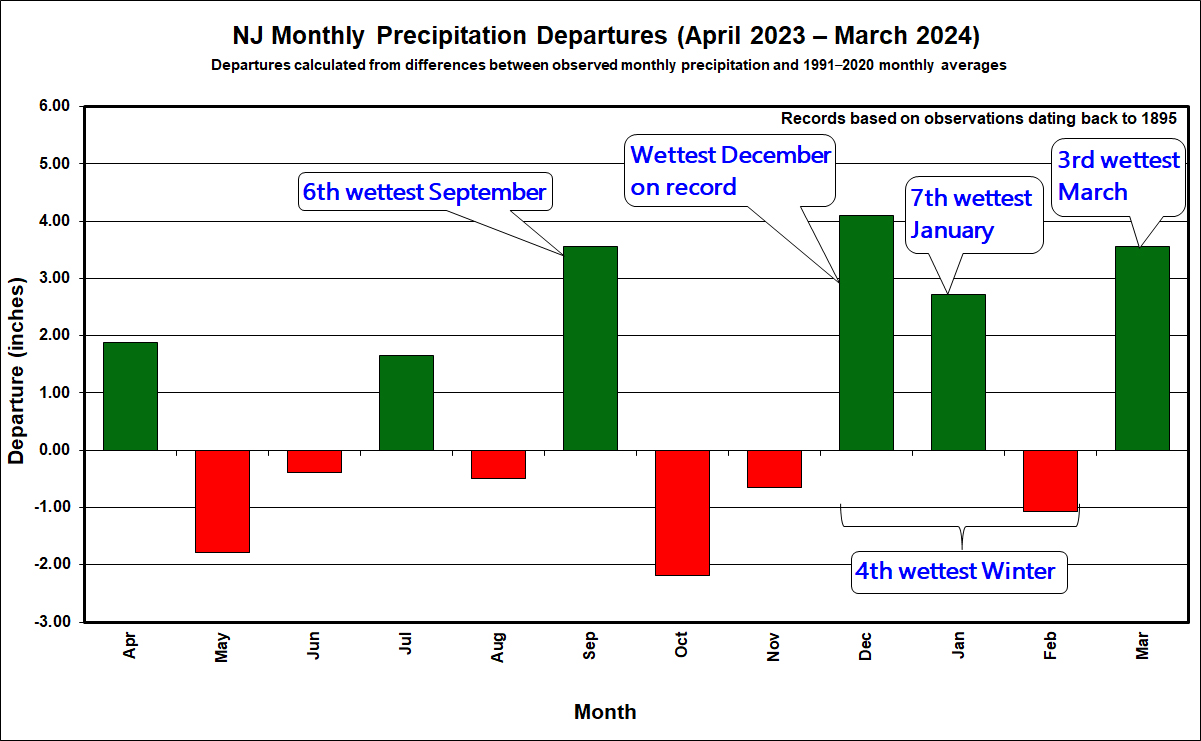
Tulip leaves are sensitive to water. When the weather is dry, the typical condition in August, the tree feels water stress and the leaves tend to lose their viability. But this year, according to the Office of the New Jersey State Climatologist at Rutgers University, while we had a rather warm July, we also had the wettest June on record and the second wettest summer so the tree had less stress and stayed leafy.

It was nice to have the tree so green for so long but this was not usual summer weather. Will this be what summer is like from now on? Anything that alters weather shifts what we can expect from the vegetation. With so much information coming out about how the climate is changing worldwide, it may seem like a little thing to be concerned about individual plants. Yet weather conditions affect all things, be it the soil, plants, insects, animals, humans. I know that weather goes in cycles. I also know that we have changed the atmosphere through our activities on earth. Perhaps the Tulip tree is one of the harbingers of change, of what will be the new normal. As my father used to say when I asked a question he couldn’t answer, “We’ll just have to wait and see.”

From The Washington Post Health and Science section:

Office of the New Jersey State Climatologist at Rutgers University rain statistics:
http://climate.rutgers.edu/stateclim/images/nj_12month_pcp_dep.JPG